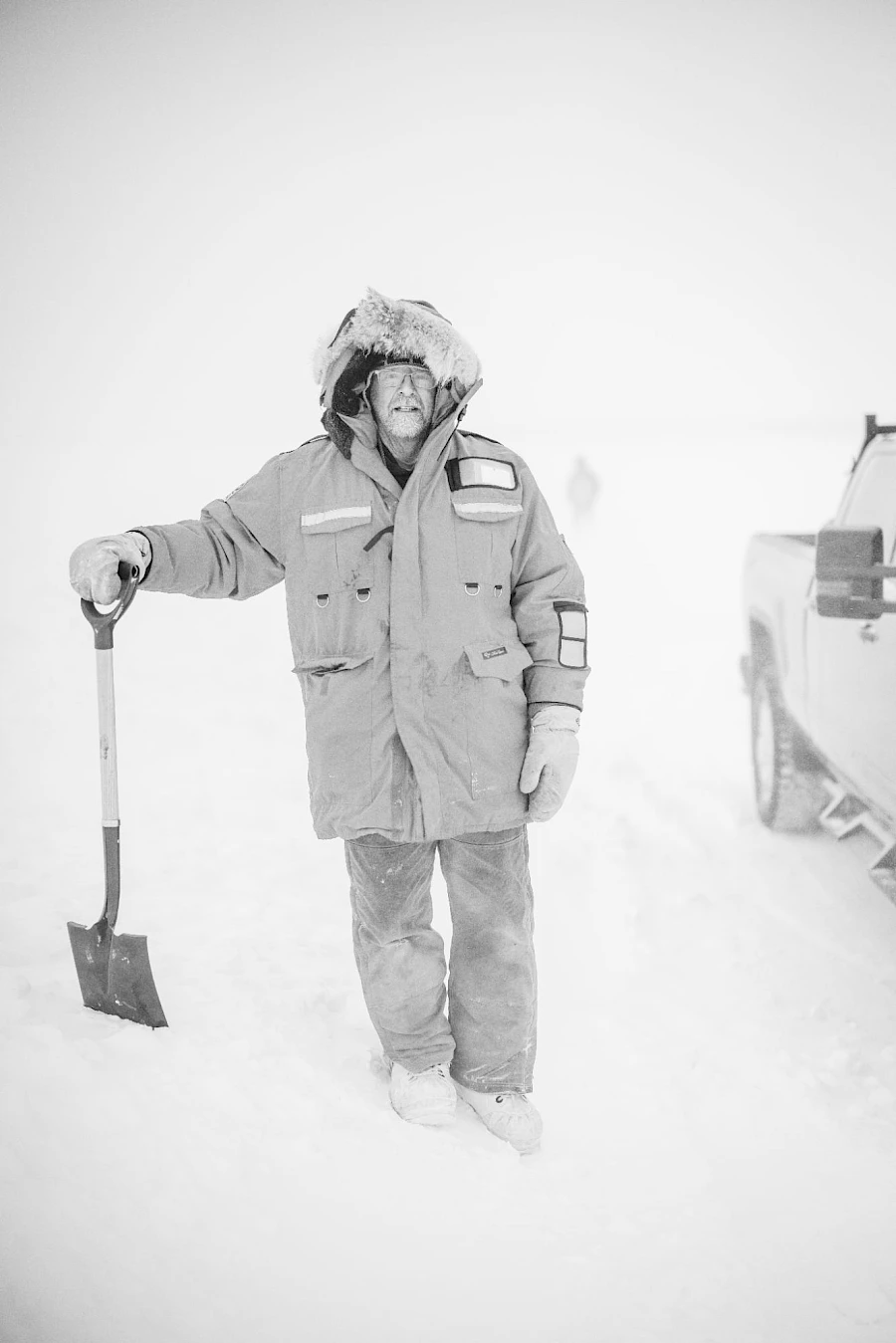
The cold
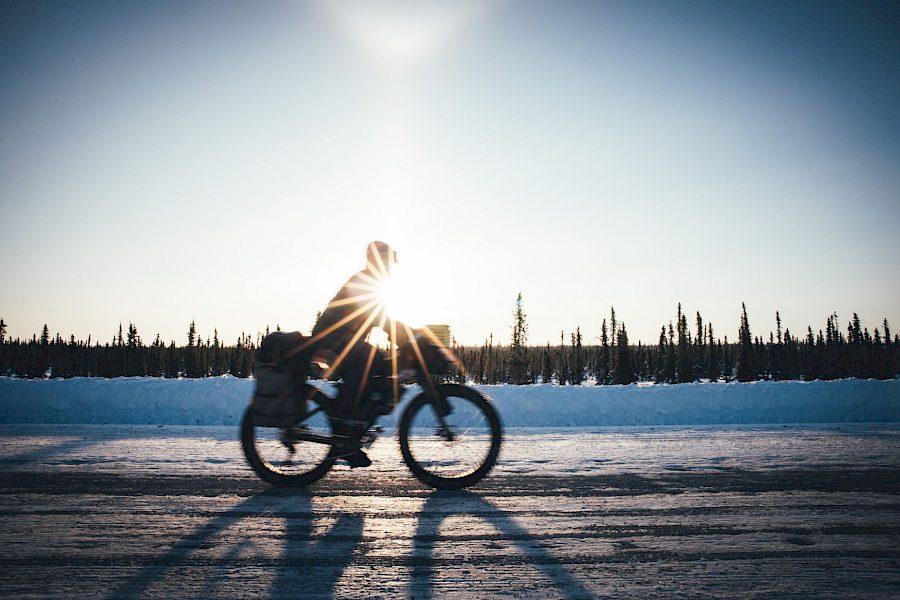
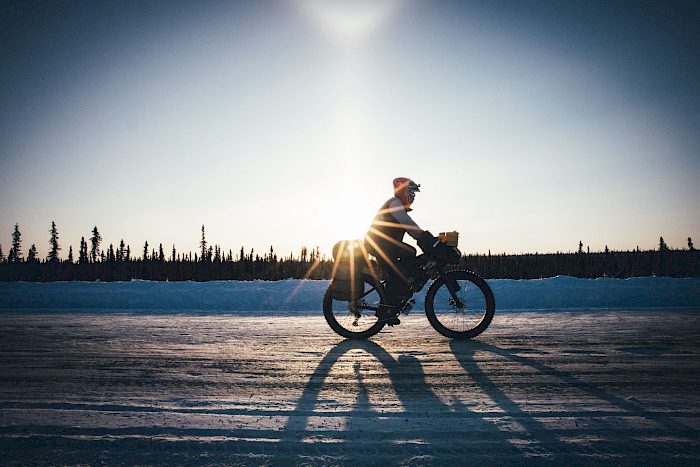
Temperatures can drop to -44°C, the wind is strong and the daylight is short. The stages are shorter than the 6633, but the Arctic isn't any warmer for it.
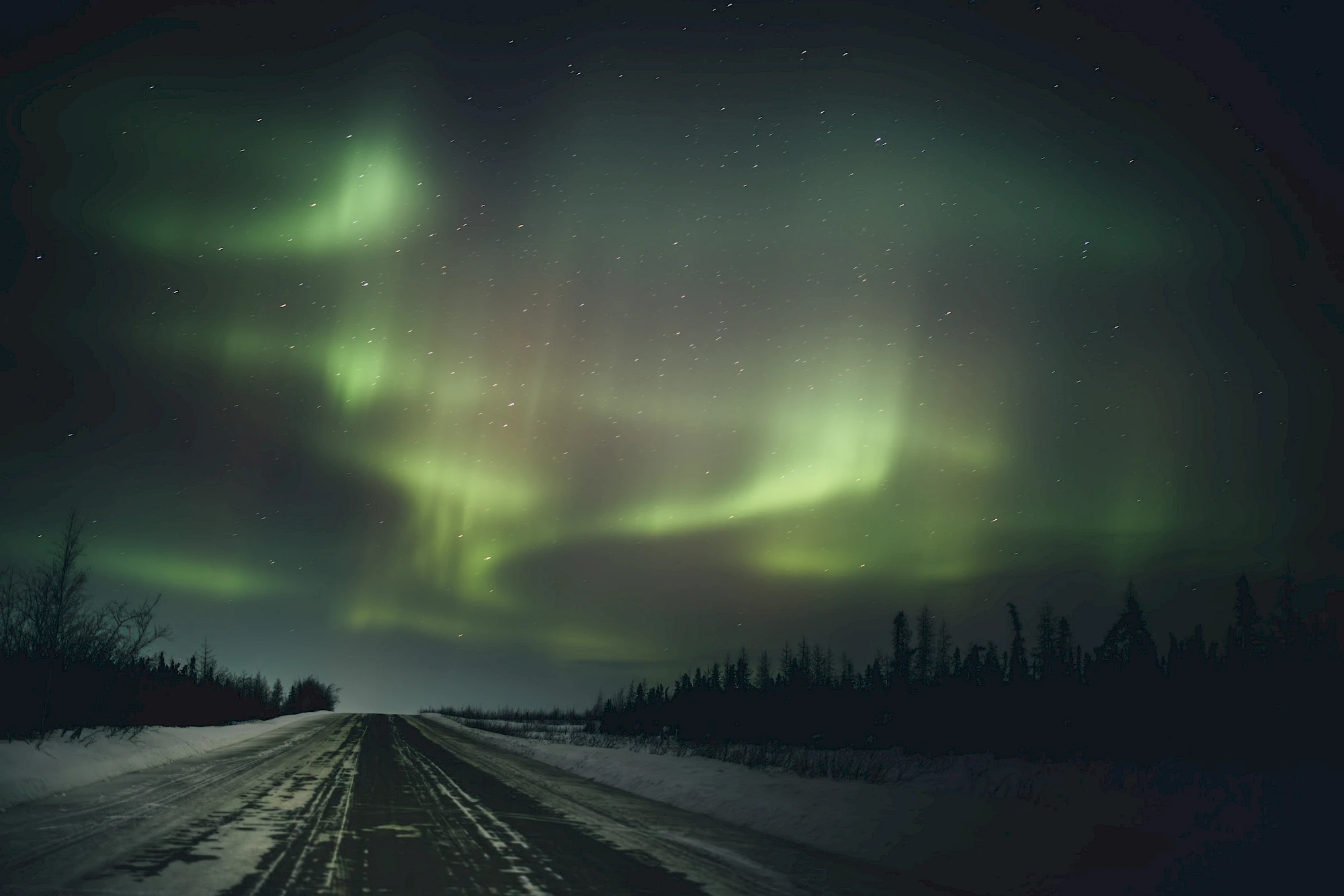

180 miles in five stages on the frozen Peel River, on foot or on skis, with a heated camp waiting at the end of every day.
The Northern Lights Ultra takes you out onto the frozen Peel River in Canada's Northwest Territories for five days of racing on private ice roads, with the Richardson Mountains alongside and nothing but snow and sky in every direction. It starts at Fort McPherson, runs north through the old trading town of Aklavik and finishes in Inuvik, and you can take it on foot or on skis.
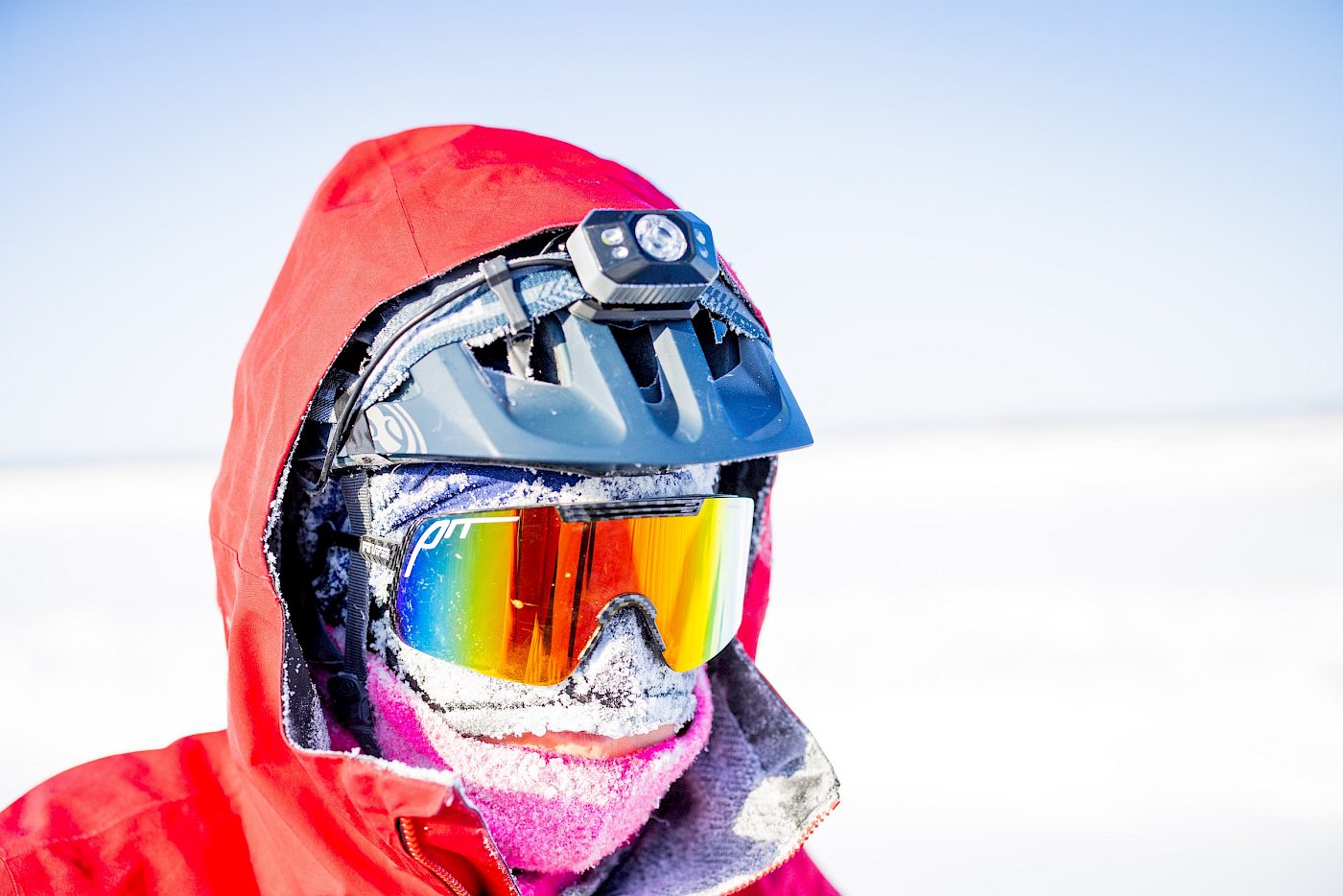
It's a staged race, so you race hard all day and then you stop. Each stage finishes at an organised camp with heated communal tents and your own space to pitch, your drop bag is waiting for you, and there's hot water at every checkpoint. At night, if the sky plays along, the aurora puts on a show over the ice.
It runs on the same frozen country as the back half of the 6633, so it's the same Arctic in a different format: race the ice by day and sleep warm by night.
The route leaves dry land at Fort McPherson and follows the ice road north along the frozen Peel River, with the Richardson Mountains on your left. You camp by Aklavik at the halfway point and cross the delta on the longest day of the race, before a final marathon on the ice road brings you into Inuvik.
5 STAGES · 180 MILES · 290KM · 4 CAMPS
Before anyone steps onto the ice we check every piece of kit and brief the whole field, so on the start line the only thing left to think about is the race.
You set off onto the ice road along the frozen Peel River and feel the temperature fall with every mile, and if the sky is clear, tonight’s camp gives you your first chance to see the aurora.
The route pushes north with the Richardson Mountains rising beside you, and the Arctic opens up in every direction for as far as you can see.
You camp by Aklavik, once a hub of Arctic trade and still full of history and hospitality, and rest up at the halfway point of the race.
The biggest day of the race tests your head as much as your legs, and it ends with your final night under the stars, with the Northern Lights if you’re lucky.
We reckon it’s the coldest, flattest marathon you’ll ever run, and it finishes on the ice road in Inuvik.
An Arctic Ice Road Staged Race Under the Northern Lights.
Temperatures can drop to -44°C, the wind is strong and the daylight is short. The stages are shorter than the 6633, but the Arctic isn't any warmer for it.
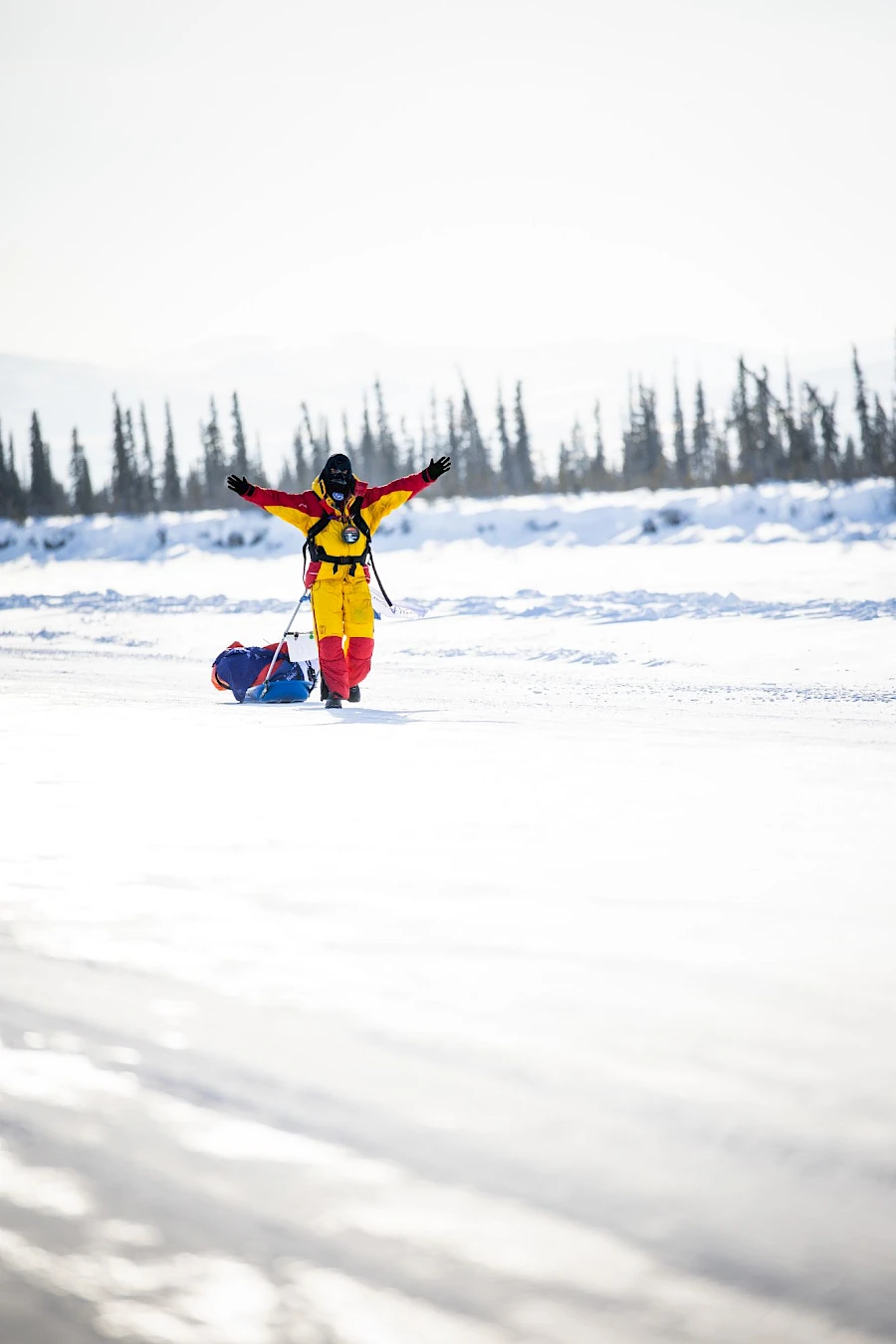
Stage four is 62 miles on the ice, and it's the day that tests your head more than your legs. Everything before it is building towards it.
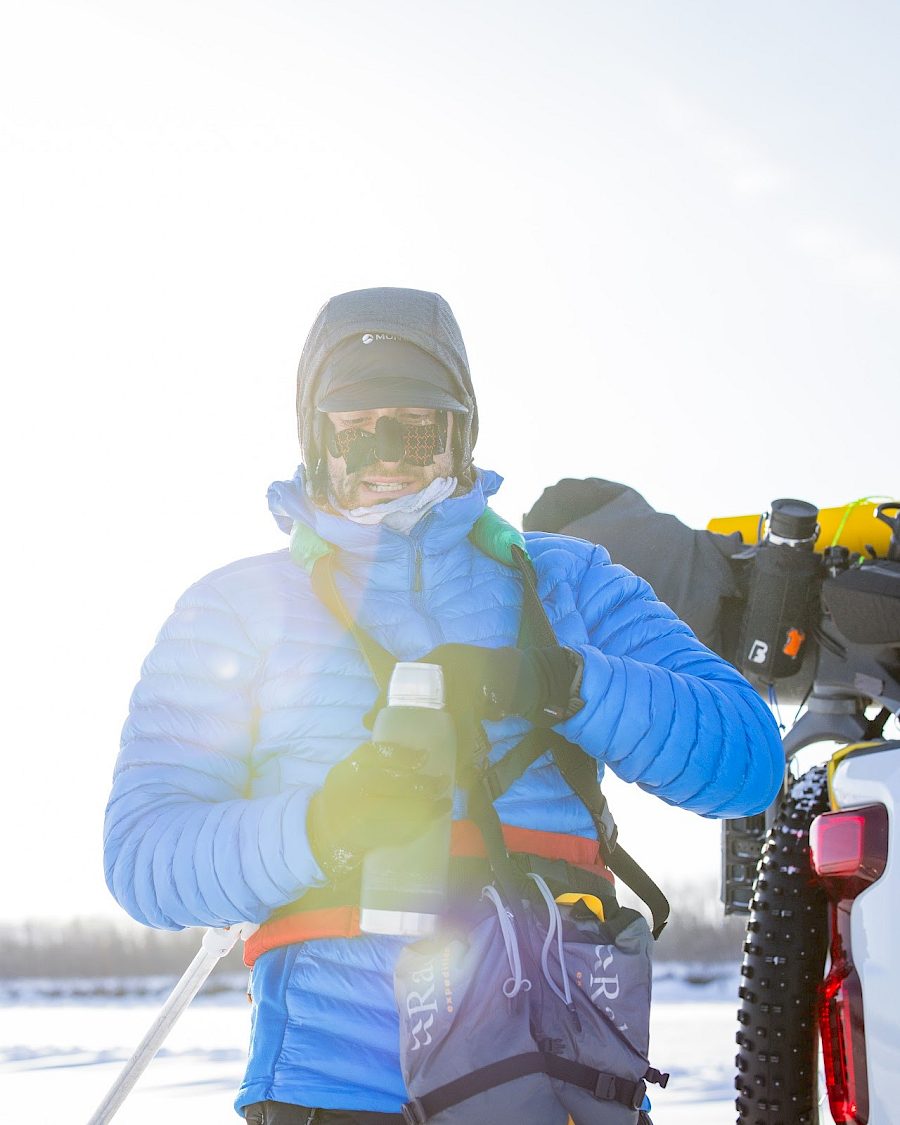
Quality counts, but knowing how to use your kit matters as much as how fit you are. Turn up knowing every piece of it, even if it cost a fortune.
You race self-sufficient between checkpoints, hauling your own sled, and every night we’re waiting with heat, hot water and your drop bag.
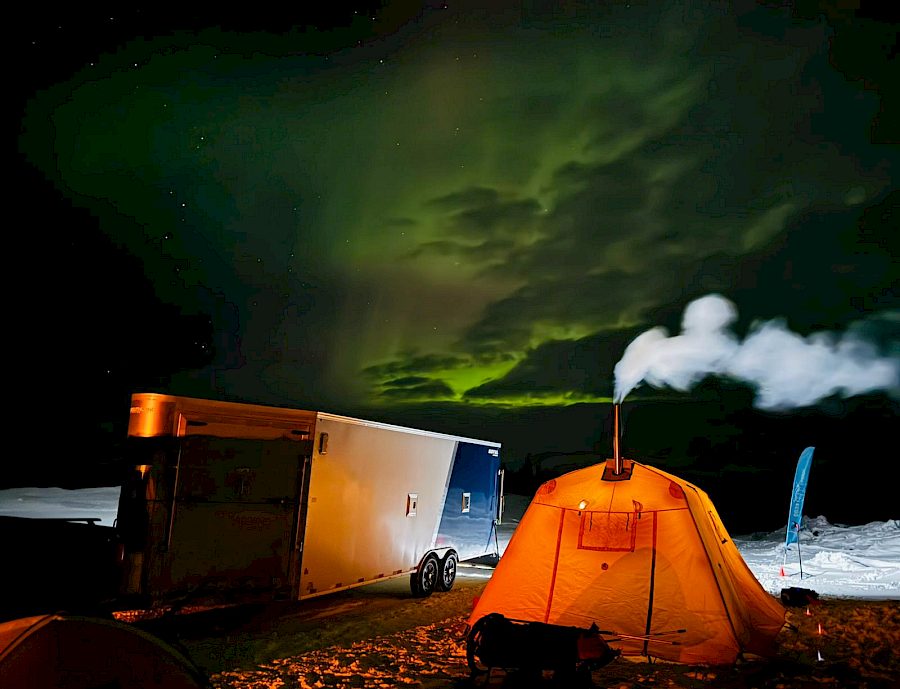
Every stage finishes at an organised camp with heated communal tents to eat, warm up and swap stories in. You pitch your own tent on the ice at Camps 1, 2 and 4, and at Camp 3 you sleep indoors in the school hall in Aklavik.
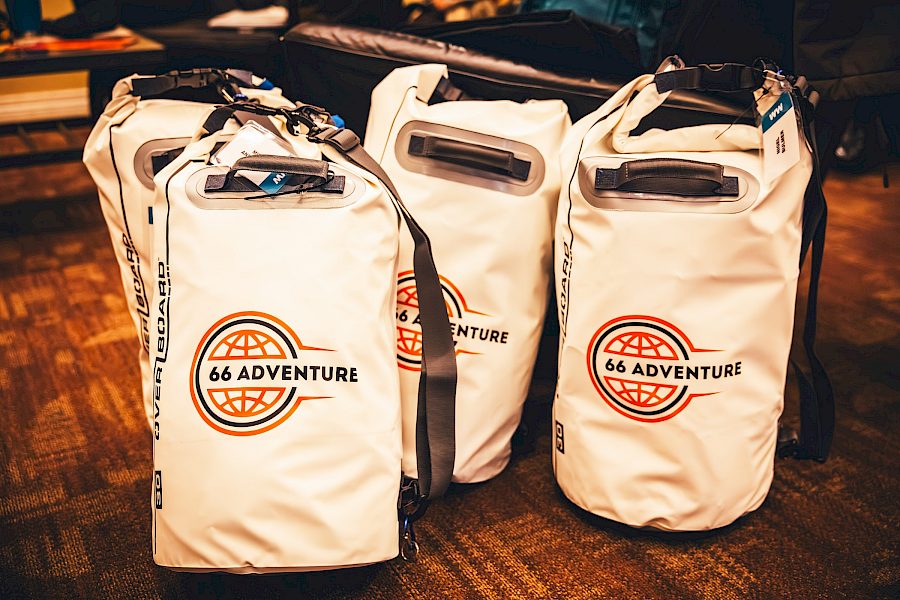
There’s hot water for cooking at every checkpoint. You also get one 30-litre drop bag, handed out at kit check, which meets you at every camp with your spare layers, socks and food for the stages ahead.
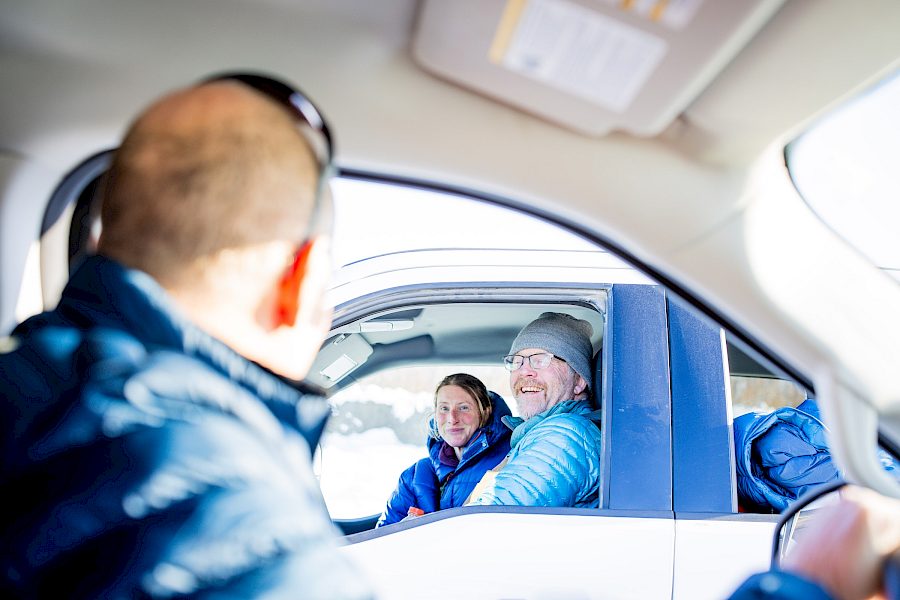
We brief cut-offs every day. They’re based on a steady 3mph (5km/h), enough to get everyone safely to each checkpoint, and they can change if the conditions or the route need it for safety.
Quality kit matters out here, but only if you can work it with frozen fingers in the dark, so these are the three things worth getting right before you come.
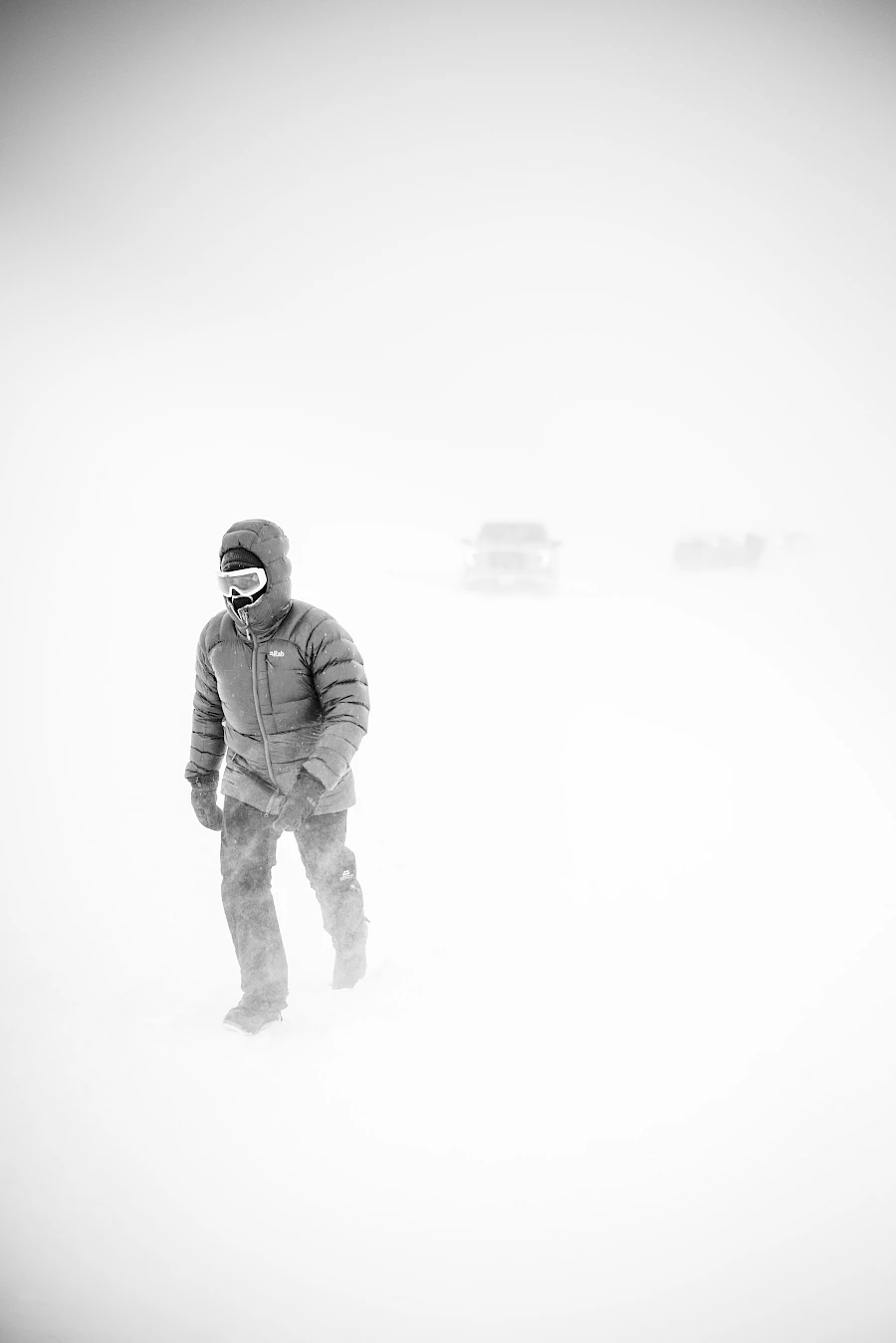
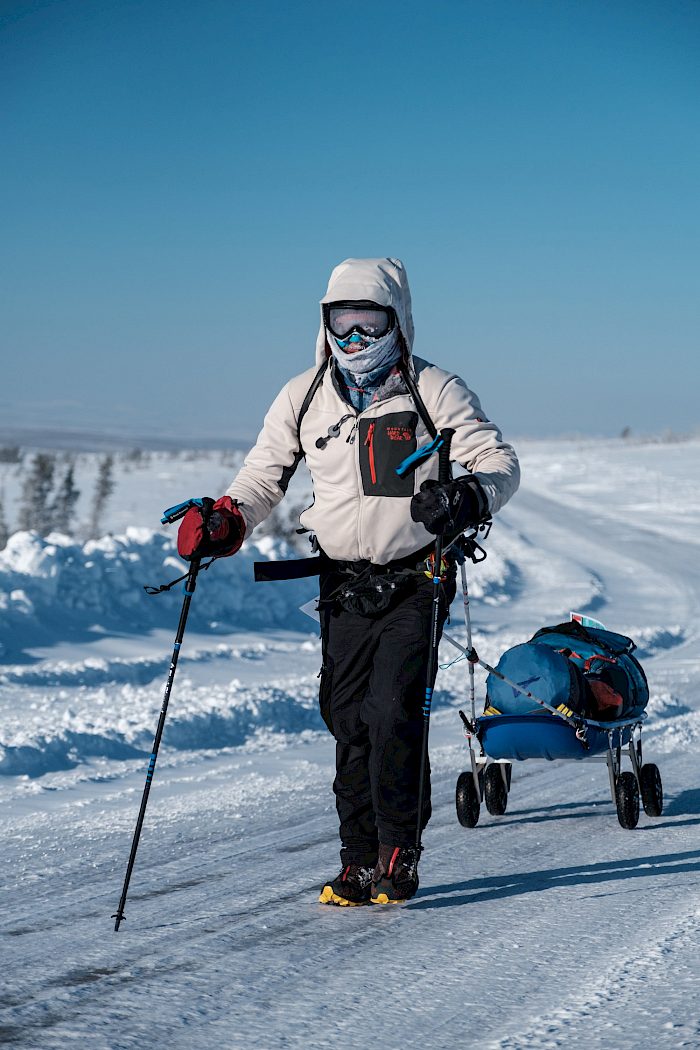
Temperatures can drop to -44°C, with strong winds and not much daylight. Build a system of high-wicking base and mid layers, a windproof shell and a down jacket, plus mitts and face cover, because sweat trapped against your skin chills you fast the moment you stop.
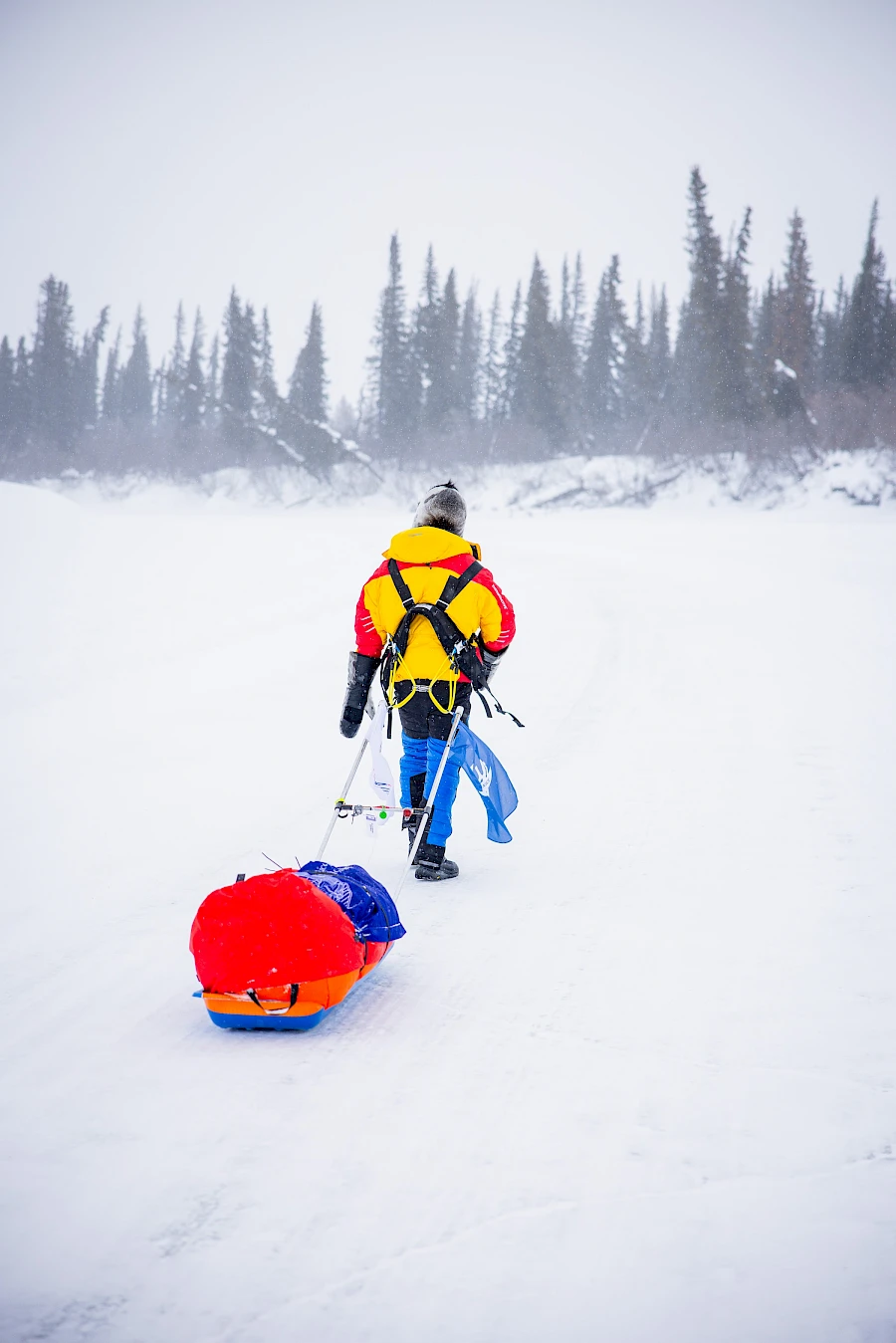
Your sled carries everything, so it needs a proper harness and rope attachments, and no wheels on this race. Trail shoes or boots are both fine as long as they’re cushioned and you’re comfortable in them for the distance, and we recommend micro spikes for the ice.
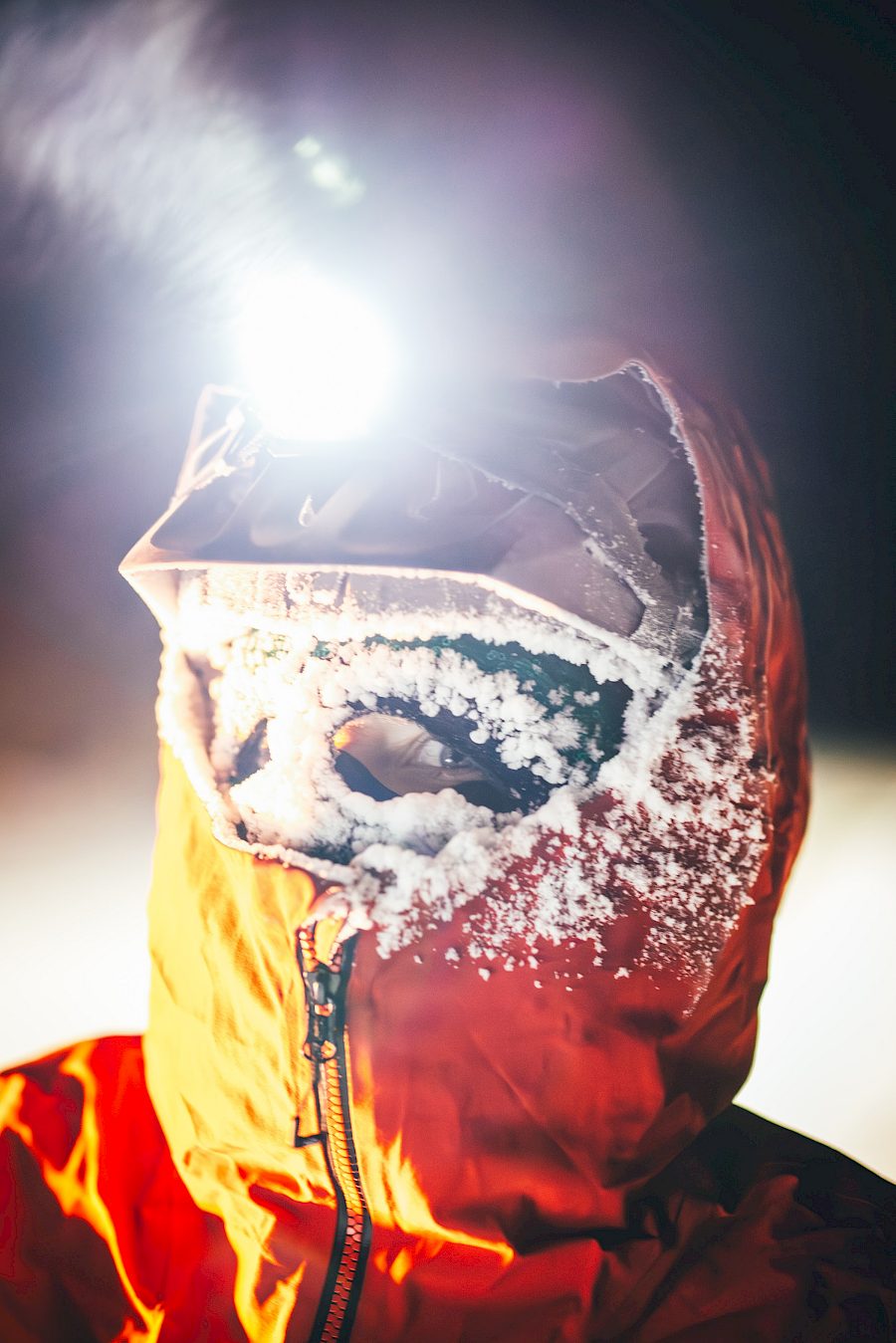
A sleeping bag rated to at least -30°C and a thermal mat are what get you through the night, with a self-inflating mat the best choice for warmth and packing small. Your stove, 24 hours of emergency food, your head torch and two flashing red beacons stay with you at all times.
We check every item on the mandatory list at kit check in Inuvik the evening before the start, so train with your kit until using it feels like second nature.
Yes. The Northern Lights Ultra is open to runners and skiers on the same route.
At an organised camp at the end of every stage, with heated communal tents for warming up and eating, and your own space to pitch.
Down to -44°C, with strong winds and short daylight hours.
We brief them each day. They're based on an average pace of 3 mph and can change with the conditions.
The 6633 is non-stop and self-sufficient: you pull everything you need and decide when to stop. The Northern Lights Ultra is staged, so you race each day and stop at a camp, with your bag and hot water waiting for you. It covers the same frozen country as the back half of the 6633.
Yes. The first edition was in March 2026, when ten starters set off from Fort McPherson in -28°C. The weather closed in on day four and we stopped the race, because out there safety comes first.
Full payment is due by 5 December 2028.

£3,000 for five stages on the Arctic ice, with a heated camp every night.
Race news, entry openings and the odd story from the ice, sent when there's something worth saying.
Complete the form to hear about upcoming events, offers, news and more.
By signing up, you agree to receive marketing emails. View our privacy policy and terms of service for more info.